
Field guide · Bulk cable
Cat6 vs. Cat6a: bandwidth, 10G distance, and shielding
Cat6 and Cat6a use the same RJ45 interface, the same four twisted pairs, and the same termination standards. The difference is headroom: Cat6a is tested to twice the frequency, adds an alien crosstalk requirement, and carries 10GBASE-T a full 100m instead of roughly a third of that. Everything else — cost, cable diameter, conduit fill, labor — follows from that.
The 30-second answer
- Cat6 is the right call for 1G edge drops, Wi-Fi APs on 1G/2.5G uplinks, cameras, and access control — the vast majority of horizontal cabling.
- Cat6a is worth it when a run must carry 10GBASE-T beyond ~40m, when the spec names Category 6A, or in dense bundles with high-power PoE.
- A channel certifies to its weakest link. Cat6a cable on Cat6 jacks is a Cat6 channel — pay for the whole path or none of it.
Cat6 vs. Cat6a specifications side by side
| Specification | Cat6 | Cat6a |
|---|---|---|
| TIA category | Category 6 (TIA-568.2-D) | Category 6A (TIA-568.2-D) |
| Tested bandwidth | 250 MHz (often swept to 550 MHz) | 500 MHz |
| 1000BASE-T distance | 100 m channel | 100 m channel |
| 10GBASE-T distance | 37–55 m, environment dependent | 100 m channel |
| Alien crosstalk (PS ANEXT) | Not specified | Specified and tested |
| Typical conductor | 23 AWG solid copper | 23–22 AWG solid copper |
| Typical outside diameter | ≈ 5.5–6.0 mm | ≈ 7.0–8.5 mm |
| Shielding options | U/UTP, F/UTP | U/UTP, F/UTP, S/FTP |
| Minimum bend radius | 4× cable OD | 4× cable OD (larger absolute radius) |
| Relative material cost | Baseline | Roughly 1.3–2× per foot |
Diameters and cost multipliers are typical ranges across manufacturers; check the datasheet for the exact cable you are pulling before sizing conduit or J-hooks.
The 10GBASE-T distance question
10GBASE-T on Cat6 is conditional, not forbidden. TIA supports it to 37m in a worst case and up to 55m when alien crosstalk is favorable. Alien crosstalk (ANEXT) is coupling between adjacent cables rather than between pairs inside one cable, so the deciding factors are how tightly your cable is bundled and how far runs travel in parallel:
- Loose, short, well-separated Cat6 bundles trend toward the 55m end.
- Large bundles cinched with tight ties and running parallel for tens of metres trend toward 37m — or fail certification outright.
- Cat6a specifies PS ANEXT and PS AACR-F, so its 100m channel holds regardless of bundling.
Practical rule: if a drop might ever need 10G and you cannot guarantee it stays under ~40m with loose bundling, pull Cat6a for that drop rather than re-pulling later.
Shielding, bonding, and what it costs you
Cat6a is not automatically shielded. Unshielded (U/UTP) Cat6a controls alien crosstalk through thicker insulation, tighter twist, and sometimes a pair separator; shielded designs (F/UTP with a foil overall, S/FTP with foiled pairs plus a braid) control it electrically. Shielded systems buy noise immunity but add obligations:
- Every component must be shielded. Shielded jacks, shielded patch panels, and shielded patch cords — a shielded cable on unshielded hardware leaves the shield floating and does nothing.
- Bond and ground the pathway. The shield needs continuity to the telecommunications bonding backbone, per TIA-607 practice, or it can act as an antenna.
- Budget more labor. Terminating shielded Cat6a takes noticeably longer per drop, and there is less room for error on jacket strip length.
In a normal commercial office, unshielded Cat6 or U/UTP Cat6a is usually the right answer. Shielding earns its cost in industrial spaces, near VFDs and large motors, in hospital imaging areas, and where a spec mandates it.
Pathway and fill: the hidden Cat6a cost
Cat6a runs roughly 25–45% larger in diameter than Cat6, and cross-sectional area rises with the square. Swapping a Cat6 design to Cat6a late in a job often means fewer cables per conduit, more J-hooks or a larger basket tray, deeper wall boxes, larger bend radii at the rack, and more crowded patch panel dressing. Price the pathway, not just the cable.
How to decide
Choose Cat6 when
- Drops serve 1G/2.5G endpoints, APs, cameras, or door controllers
- Runs are ordinary horizontal lengths and budget matters
- Conduit and tray fill is already tight
- Standard PoE (Type 1/Type 2) powers the devices
Choose Cat6a when
- The spec or bid documents say Category 6A
- 10GBASE-T is required past roughly 40m
- Wi-Fi 6E/7 APs need multi-gig uplinks with headroom
- Large bundles carry 60W or 90W PoE
Stocked Cat6 — and Cat6a on quote
Our shelf stock is 23AWG solid bare copper Cat6, swept to 550MHz, with matching keystone jacks and patch panels so the whole channel certifies as a Cat6 system. If your spec calls for Category 6A cable or shielded hardware, add your Cat6 items to the cart and note the Cat6a quantities — we will quote them with lead times alongside.
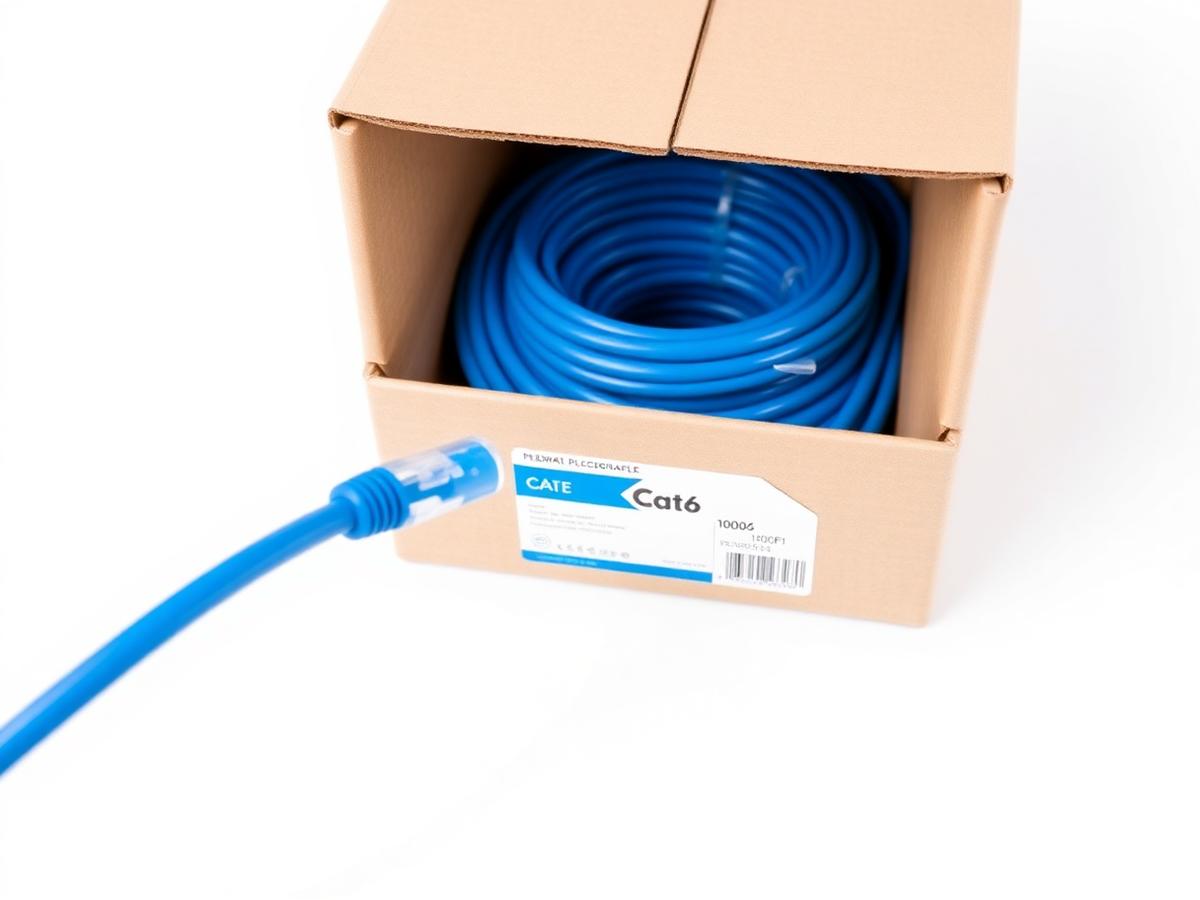
Bulk Cable
Cat6 Plenum Bulk Cable 1000ft — Blue
NTI-C6P-1000-BL
23AWG solid bare copper Cat6 CMP plenum-rated bulk cable in a pull box.
$289.00
per 1000 ft box
$329.00
In stock · 84 available
Bulk Cable
Cat6 Plenum Bulk Cable 1000ft — White
NTI-C6P-1000-WH
Plenum-rated Cat6 bulk cable for exposed white-ceiling and trim runs.
$289.00
per 1000 ft box
In stock · 41 available
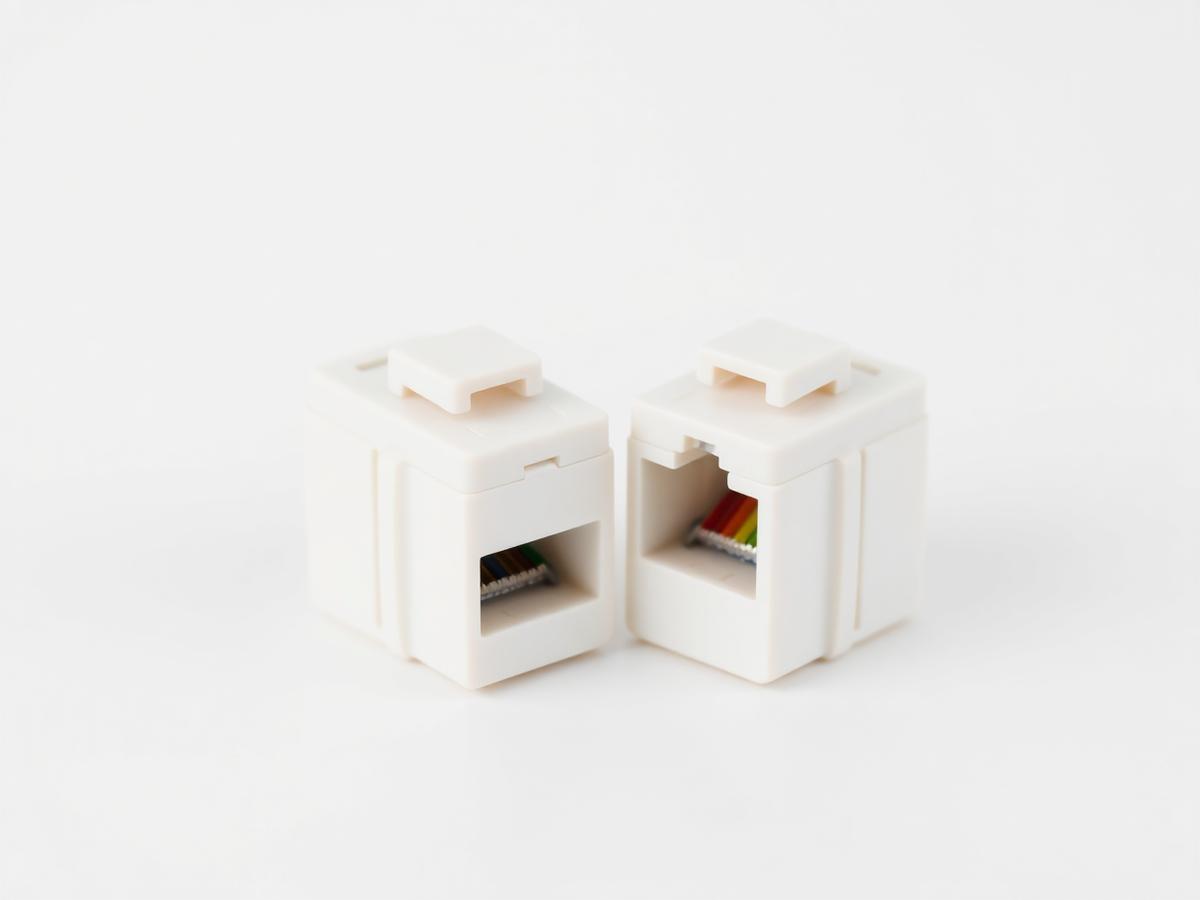
Keystone Jacks
Cat6 Punch-Down Keystone Jack — White
NTI-KJ6-WH
180-degree Cat6 keystone jack with color-coded 110 terminations.
$3.15
per Single
In stock · 1450 available
Keystone Jacks
Cat6 Punch-Down Keystone Jack — Black
NTI-KJ6-BK
Black Cat6 keystone jack for dark faceplates and AV walls.
$3.15
per Single
In stock · 690 available
Next decisions on the same run: plenum vs. riser jacket ratings and T568A vs. T568B termination order.